What Is Local Event Fortune AI?
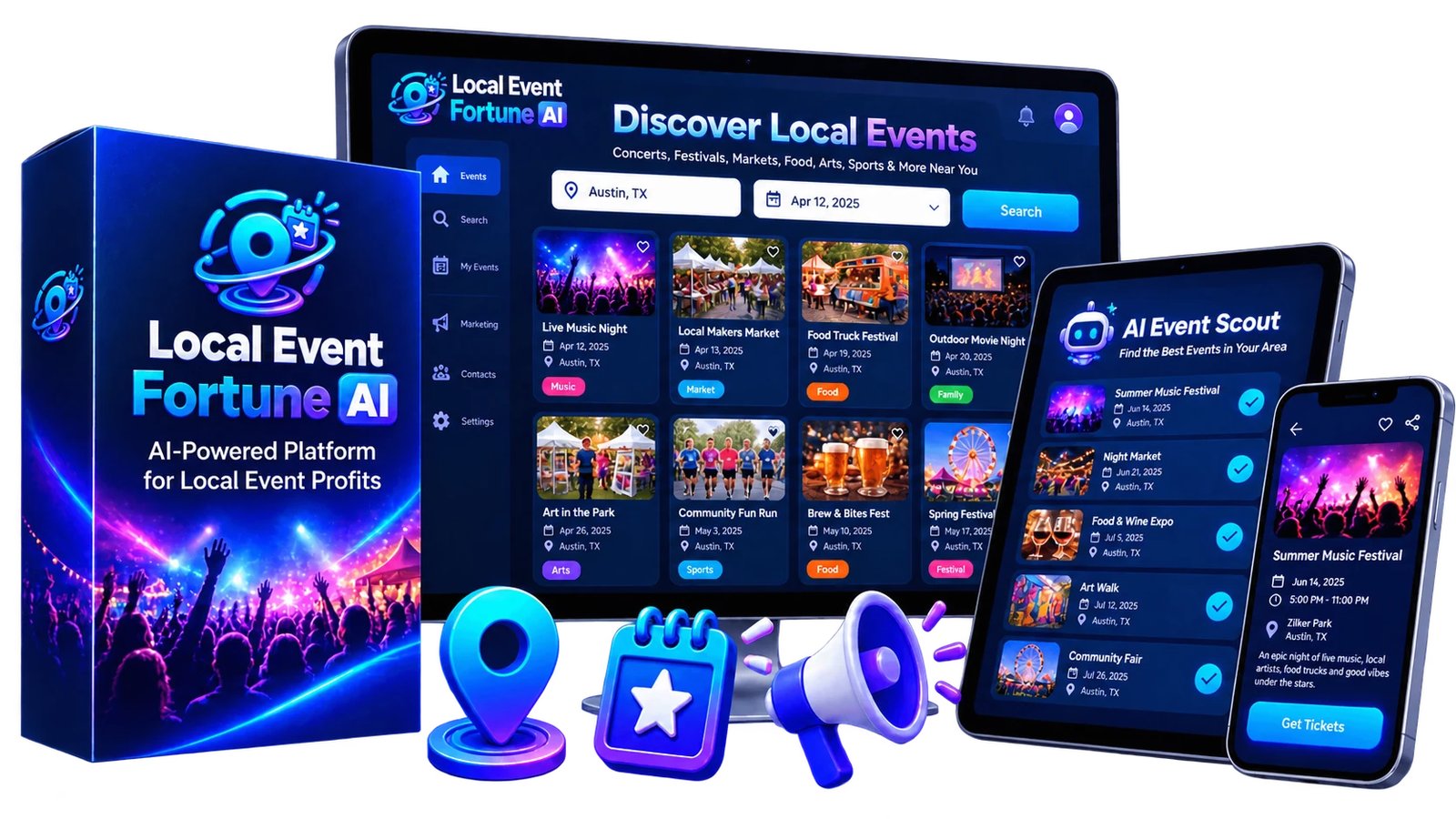
Local event fortune ai is a software tool designed to help businesses find and market to local events by automating the identification of community happenings. It uses machine learning to scan for public gatherings, trade shows, and festivals where your target audience might be present. By connecting these events to your service offerings, it aims to increase your lead generation through targeted local outreach.
Quick facts about local event marketing software
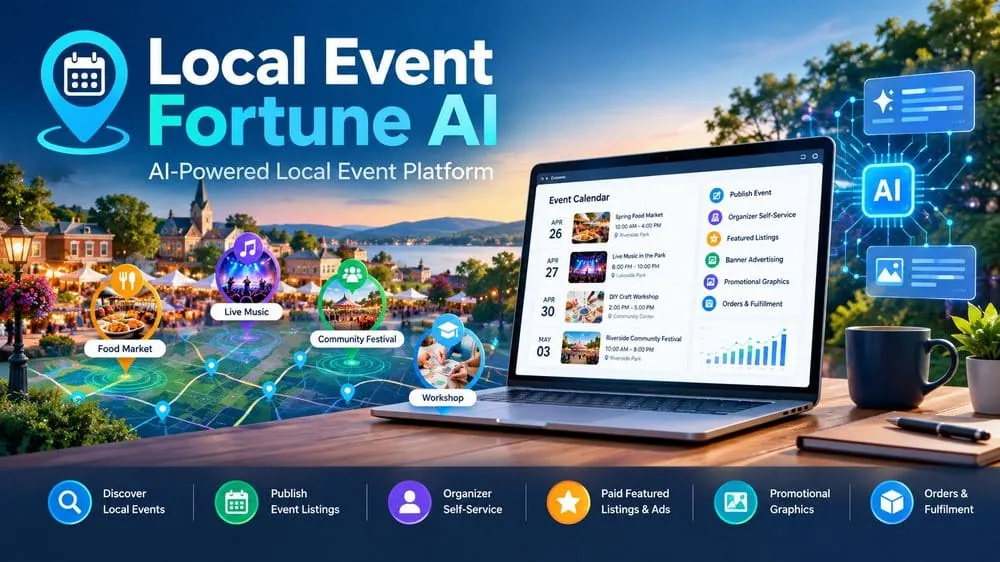
Automates the discovery of local events based on your specific industry keywords. You should input at least three long-tail phrases to avoid being buried in irrelevant regional listings.
Provides contact details for event organizers to help you reach out faster. If the software provides a direct email, prioritize a personalized pitch over a generic inquiry form.
Uses artificial intelligence to filter out irrelevant events that don’t match your niche.
Saves manual search time by centralizing event calendars from multiple online sources. This consolidation typically recovers four hours of administrative work per week for a single marketing lead.
Requires active monitoring of your dashboard to ensure you don’t miss new opportunities. Set up daily email alerts for high-priority keywords to avoid the common mistake of checking only once a month. Missing a registration deadline by even 48 hours often means losing your chance at a prime booth location or speaking slot. If your dashboard shows zero results, broaden your geographic radius by ten miles before assuming the market is empty.
Why event intelligence matters for growth
Finding the right audience is often the hardest part of building a local business. Instead of spending hours searching through local newspapers or fragmented social media pages, this tool pulls data directly into one place. It works by monitoring public web data to identify where people in your area are gathering, which allows you to position your services at the exact time your potential customers are looking for solutions.
If you’re a service provider, you know that timing is everything. When you arrive at an event prepared to solve a problem for the attendees, your conversion rate usually jumps compared to cold calling. The software simplifies this by showing you the events that attract your specific demographic. According to the Small Business Administration, understanding your market and identifying where your customers spend their time is a fundamental step in building a sustainable business strategy.
Most owners make the mistake of choosing events based on attendance size alone. This often leads to wasted booth fees at massive festivals where your niche audience is diluted. Instead, prioritize events where the attendee-to-exhibitor ratio favors your specific service. If you offer high-ticket consulting, choose a smaller industry mixer over a general community fair.
If your business relies entirely on digital products with no regional focus, the effort of attending local events will likely drain your resources. However, if your growth depends on face-to-face trust, this tool removes the guesswork from your marketing calendar.
By filtering for events that match your client acquisition cost, you can stop guessing which venues work. If your average sale is low, avoid events with high entry fees. If your sale is high, those same fees become inexpensive. Use this data to allocate your budget only to the venues that actually bring in new clients.
When your event strategy needs adjustment
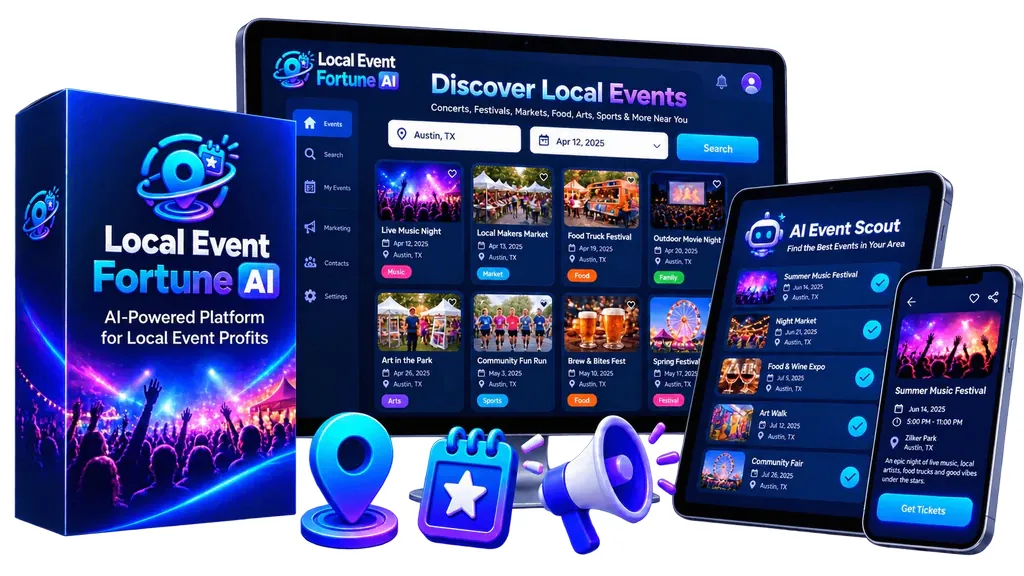
The simple approach of attending every event changes depending on your business type and your goals. Use this table to decide when you should shift your focus.
| Situation | What changes | What to do instead |
|---|---|---|
| High competition | Event saturation | Target smaller, niche gatherings |
| Limited budget | Travel costs | Focus only on local town events |
| B2B services | Audience type | Seek out trade shows instead |
| Seasonal sales | Timing needs | Use the AI for pre-season planning |
| New local brand | Trust requirements | Sponsor a booth for visibility |
Most companies burn their budget by chasing high-traffic conferences that yield zero qualified leads. If your conversion rate remains below two percent after three consecutive events, stop buying floor space immediately. Shift your resources toward private dinners or intimate workshops where you can speak directly to decision-makers for longer than five minutes.
Distinguish between brand awareness and lead generation before you book your next flight. If your primary goal is awareness, prioritize events with high foot traffic and visual impact. If you need revenue, prioritize events with a structured matchmaking program or pre-arranged meeting slots.
A common mistake is assuming that industry size correlates with event value. In reality, the most profitable opportunities often exist at regional gatherings where your competitors are absent. If you find yourself competing for attention against five larger firms at a national show, leave. You’re paying for their exposure, not yours. When you can’t differentiate your offering through a booth, you have already lost the room.
How to use event discovery tools properly
Set your primary location in the dashboard to ensure the AI only pulls events within your travel radius. If you plan to travel for business, update this setting at least 48 hours before you begin your outreach to avoid scheduling conflicts.
Input three to five specific industry keywords, such as “home renovation” or “small business networking,” to filter the event list effectively. Avoid overly broad terms like “marketing,” which often surface irrelevant webinars or massive, impersonal trade shows.
Review the “Event Reach” metric for each listing. If the expected attendance is below 50 people, prioritize larger events first to maximize your time. Smaller gatherings are only worth your effort if you have a direct connection to the organizer.
Check the contact information provided by the tool and verify it against the official event website before sending any messages. Automated scrapers often grab outdated email addresses, and sending a pitch to a defunct inbox marks your domain as a spam source.
Create a standardized outreach template that highlights how your service solves a specific problem for that event’s attendees. If the event is a workshop, focus on the skills being taught; if it’s a mixer, focus on the professional networking gap.
Track your results by counting how many leads came from the event versus your normal digital marketing channels. If your conversion rate from event leads is lower than 5%, stop targeting generic networking mixers and focus exclusively on niche industry conferences.
The mistakes that ruin your results
Ignoring the event website leads to showing up at private gatherings where your marketing is unwelcome. Check the “Sponsors” or “Exhibitors” tab before you book. If the page lists only corporate partners, assume the floor is closed to outside vendors.
Sending generic, automated emails to organizers triggers spam filters. Instead, reference a specific session title or a speaker from their last agenda. If you can’t name a detail unique to their event, don’t hit send.
Failing to follow up within 48 hours kills the momentum of a new connection. Use a calendar reminder to trigger your outreach while the conversation is still vivid in their memory. If you wait until the end of the week, the lead will have already moved on to the next vendor.
Overlooking the hidden costs of booth fees, shipping, and travel often erases your profit margin. Calculate your total burn rate before you commit to the space. You’re better off investing that capital into digital outreach where the overhead remains predictable and low.
Frequently asked questions
Can this software work for any industry?
It works best for service-based businesses, such as contractors, real estate agents, or local consultants, who benefit from face-to-face networking. If your business depends on people being physically present, the tool is highly effective at finding the right crowds. For businesses that operate purely online or globally, the local event focus won’t align with your customer base and you should look for digital-first lead generation tools instead.
How long does it take to see results?
You should expect to see your first qualified leads within 30 days of consistent outreach, provided you’re attending at least two relevant events per month. This timeline assumes you’re actively following up with every contact the software identifies. If you only use the tool to browse without taking direct action at the events, your results will be delayed or non-existent because the software only provides the data, not the sales.
Is it safe to use for my business?
It’s safe for your business as long as you follow standard email marketing practices and don’t spam event organizers with unsolicited bulk messages. The tool identifies public information that’s already available on the web, so you aren’t accessing private or protected data. Always ensure your outreach is personalized, as this keeps your business reputation positive and helps you build real relationships with local event organizers.
What happens if the event list is empty?
If your dashboard shows no events, broaden your search radius or add more general keywords to your profile. Niche industries often have fewer public events, so expanding your parameters helps the AI find related gatherings. If you still see nothing, your specific niche may rely more on digital networking than physical events.
Does it matter if I have no marketing experience?
It doesn’t matter, as the software is built to be a plug-and-play solution for people who aren’t marketing experts. You simply need to follow the steps in your dashboard to set your preferences, and the tool handles the heavy lifting of data collection. As long as you can send a friendly, professional message to an event organizer, you have all the skills required to get value from the platform.
How much time should I spend per week?
You should spend about 2 to 3 hours per week using the tool to identify events, verify the details, and send out your outreach messages. This assumes you’re working with a single local region; if you’re targeting multiple cities, you’ll need to add an extra hour for every additional location. Consistent, small blocks of time are much better than one long, exhausting session once a month.
Conclusion
You can optimize your outreach and get the most out of your local lead generation efforts by visiting this affiliate link for more info. Taking the time to understand the system and applying these steps will help you spend less time searching for customers and more time closing deals.